Ever wondered how many times in a day your tiny, wriggly bundle of joy should be eating? You’re not alone. In fact, it’s one of the most commonly asked questions by new puppy owners. The answer isn’t as straightforward as you might think; it depends on several factors including their age, size, and overall health.
In this guide, we’ll walk you through the nutritional needs of newborn puppies, feeding guidelines during the first three months, transitioning to solid food and maintaining a balanced diet for older pups. We understand that every puppy is unique and there’s no ‘one-size-fits-all’ when it comes to their dietary requirements.
So let’s take a closer look at what your little furball truly needs to grow into a healthy, happy adult dog – because serving others includes our four-legged friends too!
Nutritional Needs of Newborn Dogs
You’ll find it amazing how quickly newborn pups grow, but remember they’ve got specific nutritional needs you need to meet to keep them healthy and happy.
In their first few weeks of life, puppies rely on their mother’s nutrient-rich milk for sustenance. You don’t have to worry about feeding them anything else during this time.
As they start to wean around three or four weeks old, introduce puppy food into their diet. Begin with moistened dry food four times a day. The frequency can be reduced as the pup grows older and its stomach expands.
Always ensure that the food you choose meets the standards set by the Association of American Feed Control Officials (AAFCO). Remember, proper nutrition is key in providing a foundation for a puppy’s health and well-being.
Feeding Guidelines in the First Three Months
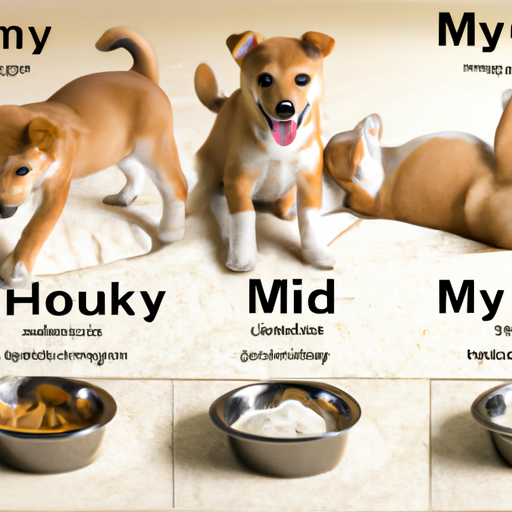
During the initial three months, it’s crucial for your little furball to have around four meals spread throughout the day. This frequent feeding is key to ensure their growing bodies receive all the necessary nutrients.
-
Morning meal: Start your pup’s day with a wholesome breakfast. Good nutrition early in the morning boosts energy levels and promotes healthy growth.
-
Midday meal: Don’t forget this important feed! It helps maintain steady blood sugar levels and supplies ongoing energy.
-
Afternoon meal: This will help keep up with your energetic puppy’s calorie needs during peak activity hours.
-
Evening meal: The last supper should be balanced and nutritious to sustain them overnight.
Remember, caring for a puppy requires patience, understanding, and lots of love along with proper nutrition!
Transitioning to Solid Food
Switching your little one over to solid food is an exciting milestone, but it’s not as simple as just replacing their milk with kibble. It’s a process that requires care and patience.
Begin by mixing small amounts of high-quality puppy food into their usual milk. Gradually increase the ratio of solid food to milk over a period of 2-3 weeks. This will help your puppy adjust to the new texture and taste while reducing the risk of digestive issues.
Ensure you’re offering them meals three to four times a day – consistency is key at this stage of development. Keep monitoring their weight and health, adjusting portions if necessary.
Remember, every pup is unique; what works for one might not work for another. It’s all about finding the right balance for your furry friend!
Dietary Requirements for Puppies Aged 4 to 6 Months
Navigating the dietary needs of your little furball as they grow into a 4 to 6-month-old can be quite the adventure! During this stage, your playful pup’s nutritional needs will change. They’ll need fewer meals but more high-quality puppy food, rich in proteins and fats.
Here are some changes you might notice:
* Your pup may start showing keener interest in mealtimes – feeding them becomes even more rewarding!
* You’ll begin to see their hunger pangs reduce as they eat fewer times but larger servings.
* It could be an exciting time watching their coat shine brighter due to improved nutrition.
* You might feel a sense of fulfillment knowing you’re contributing positively to their growth and health.
Remember, every puppy is different. Always consult a vet for personalized advice.
Maintaining a Balanced Diet for Puppies Over 6 Months
As your playful companion surpasses the six-month milestone, it’s essential to adjust their dietary routine to maintain a well-balanced nutrition regime.
At this stage, puppies usually require feeding twice a day – morning and evening meals are ideal.
Now, you’re not just striving for quantity but quality too. Opt for high-quality puppy food enriched with essential nutrients like protein, carbs, fats, vitamins, and minerals that promote growth and healthy development.
Remember, portion sizes should be carefully monitored to prevent overeating leading to obesity.
Consider introducing variety into their diet by incorporating vet-approved fruits or vegetables.
Always provide fresh water alongside meals.
Regular vet consultations can help tailor the perfect diet plan for your pup’s specific needs.
Your diligent care will ensure they grow up strong and healthy!
Frequently Asked Questions
What should I do if my puppy isn’t showing interest in the food?
Isn’t it concerning when your furry friend loses interest in food? Consult a vet immediately. They might be unwell or need a diet change. Remember, you’re their hero – their health depends on your vigilance.
How can I tell if my puppy is allergic to certain food ingredients?
You’ll notice symptoms like itchiness, diarrhea, or vomiting if your puppy’s allergic to certain food ingredients. Consult a vet for an accurate diagnosis and always monitor your pet when introducing new foods.
Can I feed my puppy human food, and if so, what kind?
Yes, you can feed your puppy human food, but only certain kinds. Lean meats, plain rice, carrots, and peas are safe. Avoid onions, garlic, grapes and chocolate as they’re toxic to dogs. Always consult your vet first.
How long should I wait to feed my puppy after they have been vaccinated?
After your puppy’s vaccination, it’s best to wait about 2 hours before feeding them. This allows their body time to process the vaccine without the distraction of digestion. Always monitor for any adverse reactions post-vaccination.
What are the signs that my puppy may be overeating or not eating enough?
If your little furball’s belly seems bloated, they’re likely eating too much. On the flip side, if they’re unusually lethargic or losing weight, they may not be eating enough. Always consult with a vet for advice.
Conclusion
So, you’ve got this puppy feeding thing down! Remember, your little buddy’s nutritional needs change as they grow.
By 6 months, they should be eating twice a day. It’s fascinating to note that puppies consume up to five times the energy of an adult dog per pound of body weight.
Keep that diet balanced and nutritious to ensure a happy, healthy pup!