Balancing the excitement of bringing home a new golden retriever puppy with the responsibility of ensuring its optimal health can feel like juggling two very different balls.
You want to shower them with love and play, yet you’re also tasked with understanding their nutritional needs.
This article is here to guide you through this crucial task. We’ll help decipher your pup’s dietary requirements by assessing their age and weight, gauging activity levels, recommending a balanced diet for optimal health, and identifying the right type of food for your fluffy friend.
By utilizing expert knowledge and scientific terminology in clear, detailed explanations, we aim to simplify your role as a pet parent.
So sit back, read on and let us help you navigate the wonderful world of feeding your golden retriever puppy – because serving others isn’t just about people; it includes our four-legged family members too!
Understanding Your Pup’s Nutritional Needs
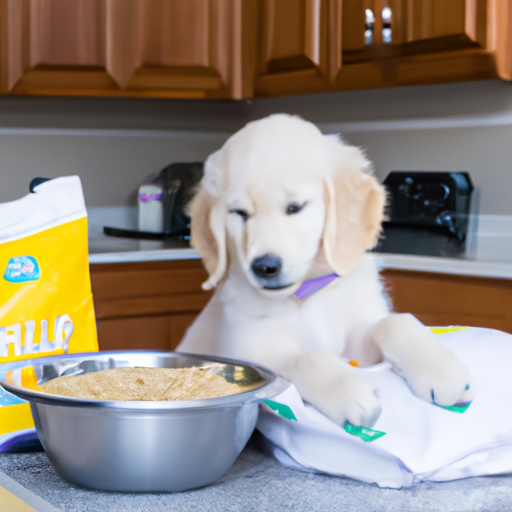
Imagine you’re holding a tiny golden retriever pup in your arms, his big brown eyes looking up at you as if to say, ‘Feed me!’
It’s important to understand that this little guy’s nutritional needs are different than those of an adult dog. Your pup requires a diet rich in proteins and fats to support rapid growth and development. His rapidly growing bones need calcium and phosphorus, while DHA is essential for brain and eye development.
Don’t be fooled by his small size; he may consume more calories per pound compared to an adult dog due to high energy demands. In the same vein, remember not to overfeed him – obesity can lead to health complications later on.
As a caregiver, it’s your responsibility to make informed decisions about his nutrition for optimal health and happiness.
Assessing Your Pup’s Age and Weight
Knowing your little one’s age and weight is as crucial as the saying goes, ‘knowledge is power,’ because it’ll help you make informed decisions about his diet.
Different ages and weights require varying amounts of nutrients, so understanding these aspects can ensure optimal growth and health for your pup.
Here are a few things to consider:
-
Age: Puppies typically need more calories than adult dogs due to their rapid growth.
-
Weight: The amount of food you give should be proportionate to your puppy’s current weight.
-
Activity Level: Active puppies may require more food due to their high energy expenditure.
-
Health Status: If your pup has certain health conditions, dietary adjustments might be necessary.
-
Breed Size: Golden retrievers are large breed dogs which have specific nutritional needs.
Remember, serving others includes our furry friends too; hence ensuring they receive appropriate nutrition is paramount.
Determining Activity Level
It’s essential to bear in mind that your pup’s level of physical activity significantly influences their nutritional needs. If your golden retriever puppy is highly active, engaging in brisk play and exercise multiple times a day, they’ll require more food than a less active pup.
This increased energy expenditure necessitates a higher caloric intake for proper growth and development.
When observing your puppy, consider how often they engage in vigorous exercise such as running or jumping. Pups who spend most of their time lounging around will need less food to prevent excessive weight gain which can lead to health issues like diabetes and joint problems.
Balancing the right amount of nutrients combined with appropriate physical activity ensures optimal health for your little companion.
Recommended Diet for Optimal Health
Believe it or not, about 56% of dogs in the United States are overweight or obese, so understanding what to include in your Golden Retriever pup’s diet is critical to their well-being. A balanced diet should always be your primary goal when feeding your young canine companion.
Here are the key components for a healthy puppy diet:
-
Protein: It’s pivotal for muscle development and growth. Look for high-quality sources like chicken, beef, or fish.
-
Fats: Essential for energy and skin health. Omega-3 fatty acids are particularly beneficial.
-
Carbohydrates: Provide energy and aid digestion. Opt for complex carbs such as sweet potatoes or brown rice.
Remember, carefully monitoring portion sizes alongside providing balanced nutrition ensures optimal health for your growing Golden Retriever puppy.
Identifying the Right Type of Food
Deciding on the perfect chow for your furry friend can be a real head-scratcher, don’t you think? It’s crucial to choose puppy food specifically designed for large breeds like golden retrievers.
These formulas contain a balanced ratio of protein, fats, and carbohydrates that cater to their fast growth rate. Look out for high-quality proteins such as chicken, beef, or fish as the first ingredient on the label. Ensure it includes DHA (Docosahexaenoic Acid), an essential omega-3 fatty acid vital in cognitive function and retinal health development. Avoid foods with artificial preservatives, colors, or flavors.
Remember, each pup is unique. What works best is observing your puppy’s reactions after meals – energy levels, digestion process, and whether they seem satisfied afterward. Your vet can also provide personalized advice based on your pup’s health condition.
Frequently Asked Questions
What is the best way to transition my Golden Retriever puppy to a new food?
To transition your golden retriever puppy to new food, gradually incorporate the new diet over a week. Start by mixing 25% new food with 75% old, gradually increasing the ratio until fully switched.
How many times a day should I feed my Golden Retriever puppy?
An old saying goes, ‘moderation is key,’ and it rings true for your golden retriever puppy’s feeding schedule. It’s recommended to feed them three times a day during their rapid growth phase.”
What should I do if my Golden Retriever puppy is not eating its food?
If your golden retriever puppy isn’t eating, it could indicate health issues. First, check for symptoms of illness. If none, try changing their food variety or feeding schedule. Consult a vet if the problem persists.
Is it safe to give my Golden Retriever puppy human food or treats?
Walking a tightrope, feeding your golden retriever puppy human food can be risky. While occasional safe options like carrots or apples are fine, many human foods contain toxins harmful to dogs. Always prioritize dog-specific nutrition.
What are the signs of food allergies in Golden Retriever puppies?
Signs of food allergies in your golden retriever puppy may include itchy skin, ear infections, gastrointestinal issues like diarrhea or vomiting, and chronic gas. If you notice these symptoms, consult with your vet immediately.
Conclusion
Feeding your Golden Retriever puppy is a fine-tuned dance, balancing age, weight, and activity level. Just like an engine needs the right fuel to run smoothly, your pup requires proper nutrition for optimal health. Choose high-quality food, packed with nutrients, to keep their tail wagging happily.
Remember, every pup is unique – consult with your vet for precise measurements and dietary advice. A well-fed puppy means a healthier dog in the future!