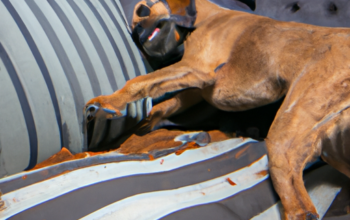
Ever observed your canine companion suddenly dash around the house, darting back and forth with seemingly boundless energy? You’ve just witnessed ‘zoomies,’ a common yet intriguing phenomenon in dogs.
You may wonder why this happens, what triggers it, or even if it’s something to worry about. In this article, we delve into the scientific understanding of ‘zoomies’ – from their occurrence and underlying causes to their role in energy release and dog behavior. Drawing on evidence-based research, we aim to provide objective insights into this fascinating aspect of your pooch’s life.
Furthermore, as safety is paramount when dealing with pets, we will also explore precautions you should take during these episodes. So come along on this journey of discovery as we unravel the mystery behind your pet’s zoomie antics!
Understanding the Phenomenon
You’ve probably seen it before, your dog suddenly darting around the house like a rocket – that’s what we call ‘zoomies’. But have you ever wondered why this hilarious phenomenon occurs? If so, welcome to zoomies psychology.
The scientific term for zoomies is Frenetic Random Activity Periods (FRAPs). They typically occur when a dog has excess energy stored up which needs to be released.
The origin of zoomies can be traced back to our canine friends’ wild ancestors who needed sudden bursts of speed and agility for hunting or escaping predators. Today, domestic dogs exhibit this behavior as playful antics rather than survival tactics.
Evidence from ethology (the study of animal behavior) suggests that zoomies are a healthy part of your dog’s life and serve an important role in motor skill development.
Triggers and Occurrences
There’s an abundance of triggers that can spark your furry friend’s sudden burst of energy, commonly referred to as ‘zoomies’. Zoomies are often influenced by environmental factors or a sudden change in mood.
The following table summarizes the frequency and possible triggers of zoomies:
| Zoomies Frequency | Environmental Influence | Trigger |
|---|---|---|
| Daily | New Environment/Room | Excitement |
| Weekly | Weather Changes | Anxiety/Stress |
| Rarely | Presence of Other Dogs/Pets | Playfulness |
Zoomies frequency may vary with each dog depending on their individual personality traits. For example, some dogs might get zoomies daily due to high excitability, while others only display this behavior once in a blue moon when they’re particularly playful or stressed. Understanding these triggers helps owners anticipate and manage their pet’s energetic outbursts effectively.
The Role of Energy Release
When it comes to your pet’s sudden bouts of hyperactivity, one theory suggests that these zoomies serve as an essential mechanism for releasing pent-up energy. This energy release is often triggered by various physical stimulants or instances of mental excitement.
- Physical Stimulants:
- Exercise or play can overstimulate your dog, causing a spike in adrenaline levels, which in turn triggers zoomies.
-
Certain touchpoints on a dog’s body can also induce this behavior.
-
Mental Excitement:
- New environments or the presence of unfamiliar people and animals can provoke a state of hyperarousal leading to zoomies.
- Unexpected events such as surprises or sudden changes in routine may also induce this behavior.
This theory is supported by numerous observations and studies, reinforcing the role of energy release in canine zoomies.
Zoomies and Dog’s Behavior
It’s fascinating to observe how these bursts of energy, known as zoomies, manifest in the behavior of our canine companions. Zoomies impact dogs’ behavior by causing them to run around in frenzied, unpredictable patterns. This phenomenon is generally a healthy expression of happiness and excitement, though it can sometimes be sparked by stress or confinement.
Scientific studies suggest that breed susceptibility plays a role too. Some breeds are more prone to experiencing this energetic outburst than others due to their inherent energy levels and genetic predispositions. For instance, high-energy breeds like Border Collies and Jack Russell Terriers are often seen displaying this behavior more frequently.
Remember that while amusing, zoomies should be supervised for safety as abrupt movements could potentially lead to accidents or injuries.
Safety Precautions During Zoomies
As you watch your furry friend darting back and forth in a wild display of energy, it’s crucial to ensure their safety during these moments of unbridled joy. Preventing accidents should be your top priority when your dog gets the zoomies.
According to scientific evidence, dogs often lose some control over their movements during these energetic bursts, which can lead to injuries if they run into sharp objects or hard surfaces.
Zoomies supervision is not about limiting their natural behavior but ensuring a safe environment. Make sure the area is free from potential hazards like furniture with sharp corners or slippery floors that could cause them to skid and hurt themselves. Always keep an eye on them, intervening only if necessary for their safety.
Frequently Asked Questions
What breeds of dogs are more prone to experiencing zoomies?
Imagine a tornado of fur and excitement. That’s the impact of zoomies on a dog’s behavior, like greyhounds or terriers with high energy levels. Scientific evidence suggests these breeds are more likely to experience zoomies.
Are there any specific health conditions that could cause more frequent bouts of zoomies in dogs?
Certain health conditions, like hyperactivity disorders or neurological issues, could trigger more frequent zoomies in dogs. However, evidence-based prevention methods for zoomies are not well-established due to its natural occurrence.
Can dogs outgrow the zoomies as they age or is it a lifetime behavior?
In the grand tapestry of canine behavior, zoomies triggers often diminish as dogs mature. However, this isn’t a hard and fast rule; some dogs continue to exhibit this playful energy throughout their lives.
Do zoomies occur in other animals or is it exclusive to dogs?
Zoomies aren’t exclusive to dogs. They’re observed in other animals too. For instance, ‘Zoomies in Cats’ is a common phenomenon and ‘Wildlife Zoomies’ are often reported, highlighting the widespread nature of this behavior.
Are there any particular diets or foods that can trigger or curb the occurrence of zoomies in dogs?
Like a sugar rush in kids, high-carb foods can fuel your pup’s zoomies. But, the ‘Zoomies Impact on Digestion’ is minimal. The ‘Nutritional Influence on Zoomies’ isn’t well-studied but balanced diets may help curb them.
Conclusion
You’ve seen it, that burst of energy dogs get called ‘zoomies’. It’s no accident, but a way for them to release pent-up energy.
Triggers vary from bath times to playtimes.
Although seemingly chaotic, zoomies reflect normal dog behavior and can be safely managed with precautions.
So next time your pooch gets the zoomies, remember they’re just burning off some extra steam!